AI Was Meant to Save Time. Its Users Are Working Longer Days
Office workers who use AI are online for up to 90 minutes longer a day than those who don't, ActivTrak data on 9,140 people suggests, with more app switching and shorter stretches of focus.

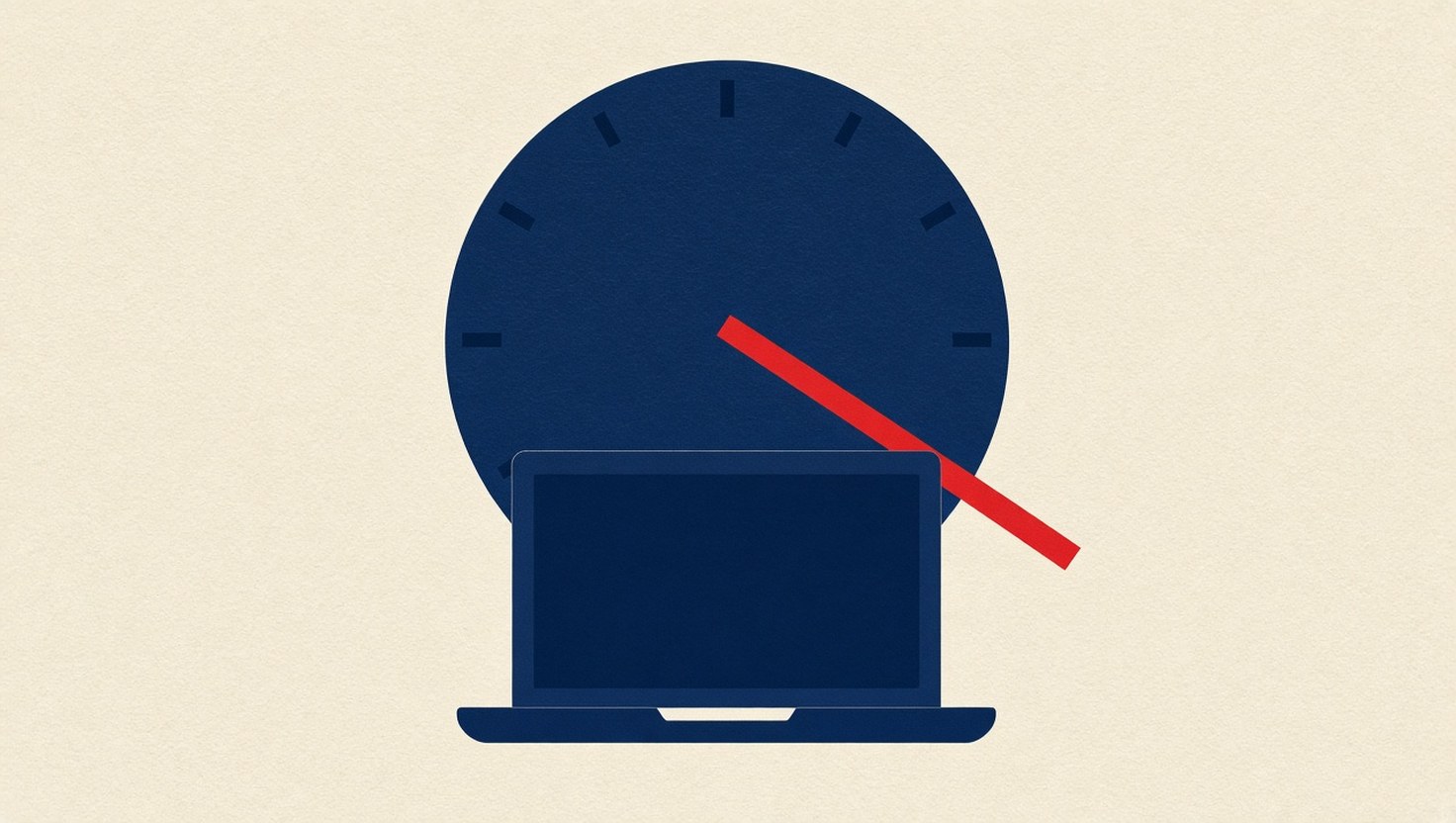
People who use AI at work are online for up to 90 minutes longer each day than colleagues who don’t, according to activity data from 9,140 office workers. The tools are sold as a way to save time. In this data, the time isn’t coming back.
The figures come from a report published on 29 October by the ActivTrak Productivity Lab. ActivTrak sells software that tracks how staff spend their time on work computers, and the lab drew on that data from 467 companies between 1 April and 25 September 2026. It measured what people actually did on screen rather than asking them. Gizmodo picked up the findings on Tuesday.
What the data shows
A “workday span” here means the time from someone’s first activity of the day to their last. For AI users it averaged 8.4 to 9.1 hours, depending on how much they used the tools. For people who don’t use AI it was 7.6 hours.
Heavy users, defined as more than 45 minutes of AI a day across at least five sessions, spent less of their time in meetings: 3%, against 5% for non-users. Their longer days still added about 18 minutes of work outside scheduled hours.
Their attention was also more broken up. Heavy users averaged 37.8 minutes of uninterrupted work at a stretch, against 48.2 minutes for light users, about 22% less. People using a chatbot in a separate browser tab switched between apps up to 4.2 times an hour, more than four times the non-user rate of 0.95. Those using AI built into their main work software switched about 0.6 times an hour.
What it doesn’t show
The report shows a link, not a cause. People who already work long days may simply be more likely to take up AI tools. ActivTrak’s press release goes further, quoting Gabriela Mauch, head of the Productivity Lab: “AI may help employees complete tasks faster, but our research shows it contributes to longer workdays, more application switching and shorter focus sessions.”
It fits earlier research. In an eight-month study at a US tech company of about 200 people, published in Harvard Business Review in February, UC Berkeley Haas researchers Aruna Ranganathan and Xingqi Maggie Ye found that employees “worked at a faster pace, took on a broader scope of tasks, and extended work into more hours of the day, often without being asked to do so.”
Why it matters
If AI makes tasks quicker but the day gets longer, the saving is going to employers as extra output, not to workers as free time. For anyone told AI will lighten their load, the early evidence says to watch the clock, and to ask what happens to the hours it saves.