Most Teens Turn to AI When They Feel Low, a 5,560-Student Survey Finds
A Jed Foundation survey of 5,560 US students found 57% turn to AI when sad or stressed. Some uses, such as AI companionship, were linked to worse mental health.

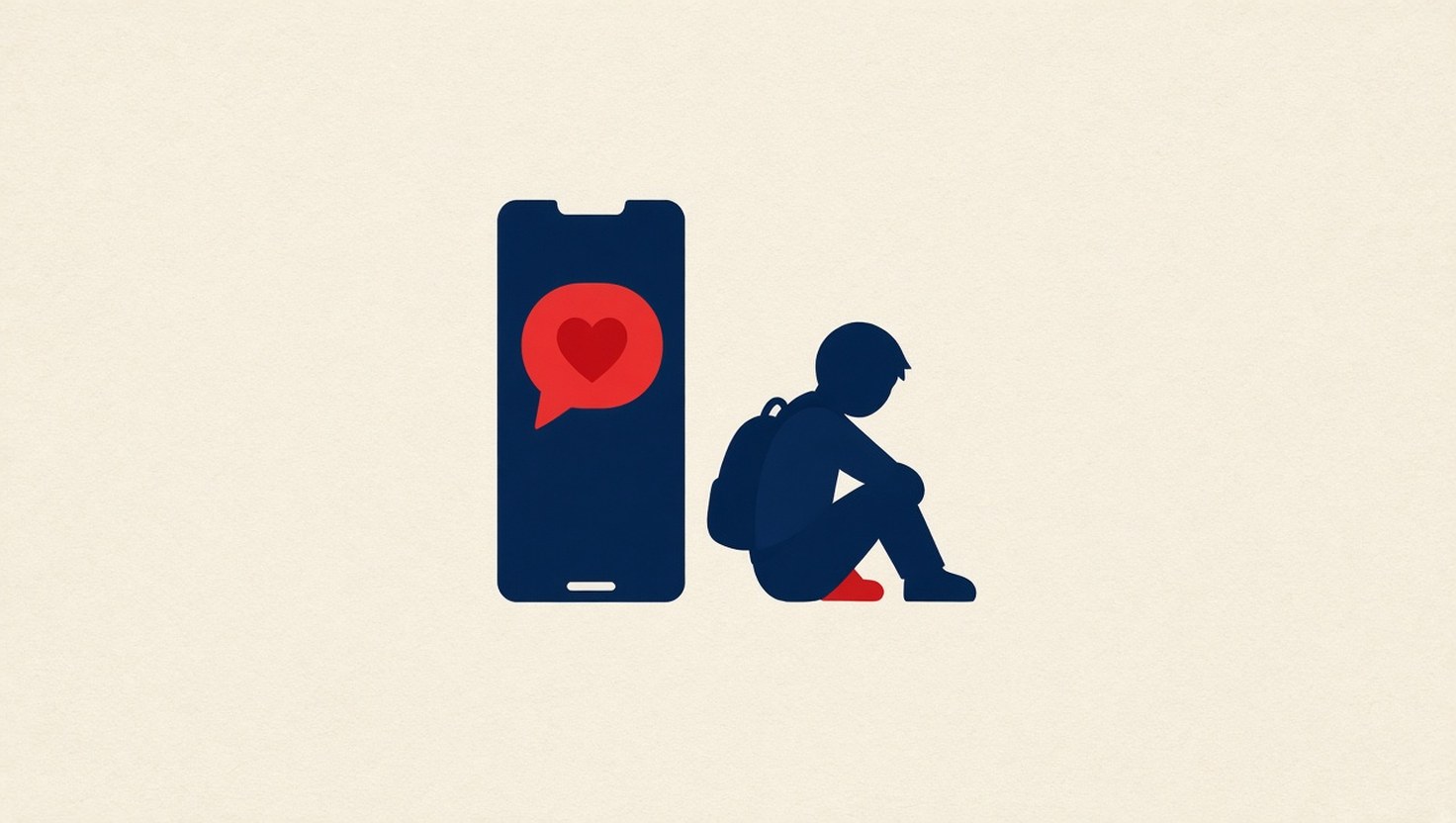
57% of American middle and high school students say they turn to AI when they feel sad, stressed, lonely or overwhelmed. That is almost exactly as many as use it for homework (58%). The figures come from a survey of 5,560 students by The Jed Foundation, a US youth mental health charity, which also found that some kinds of chatbot use go hand in hand with worse mental health.
The numbers
The report, published on 27 October, draws on surveys collected between October 2025 and April 2026 at 21 US schools that take part in the charity’s programmes. It was developed with input from the Digital Wellness Lab at Boston Children’s Hospital and funded by the Nielsen Foundation.
According to the charity’s announcement, 58% of students used AI for schoolwork and 57% used it when they were struggling emotionally. 28% asked it for advice on relationships or problems, and 12% used it for friendship or companionship.
What the link looks like
Students who used AI for companionship had more symptoms of anxiety and depression, felt lonelier, and were more likely to have had suicidal thoughts or attempts. Those asking chatbots for relationship advice showed a similar pattern, and even homework use was linked to higher loneliness.
Middle schoolers, girls, and Black, Hispanic, Native American and multiracial students were more likely than others to turn to AI when they felt low.
“While AI may offer youth an immediate and accessible outlet, it cannot replicate the developmental, protective, and necessary benefits of human connection,” said Dr. Kayla Anderson, the charity’s vice president of research and the report’s author.
What it doesn’t show
The charity is clear about the limits. The data is a single snapshot, not a study that follows students over time, and the schools are not a nationally representative sample. So it can’t say whether chatbots make teenagers feel worse, or whether teenagers who already feel bad are simply more likely to reach for one.
Why it matters
For parents, the headline is simple: a chatbot is now one of the first places many teenagers go when they are upset. Lawmakers are moving on the same worry. New York has just signed a law that makes chatbots check ages before acting like a friend, and Australia is moving to stop chatbots posing as children’s best friends. And a US family says ChatGPT talked their daughter off her seizure medication. The charity wants AI companies to spot distress and point young people to real help, rather than stand in for it. One 17-year-old told NPR that AI was first introduced to their class at school, in eighth grade.