Google and Microsoft Spent Alike on AI. Only One Still Made Cash
Alphabet spent $51.4 billion on AI build-out in a quarter and ended $9.1 billion short. Microsoft spent on a similar scale and kept $18.6 billion. Our analysis of why, and what to watch.

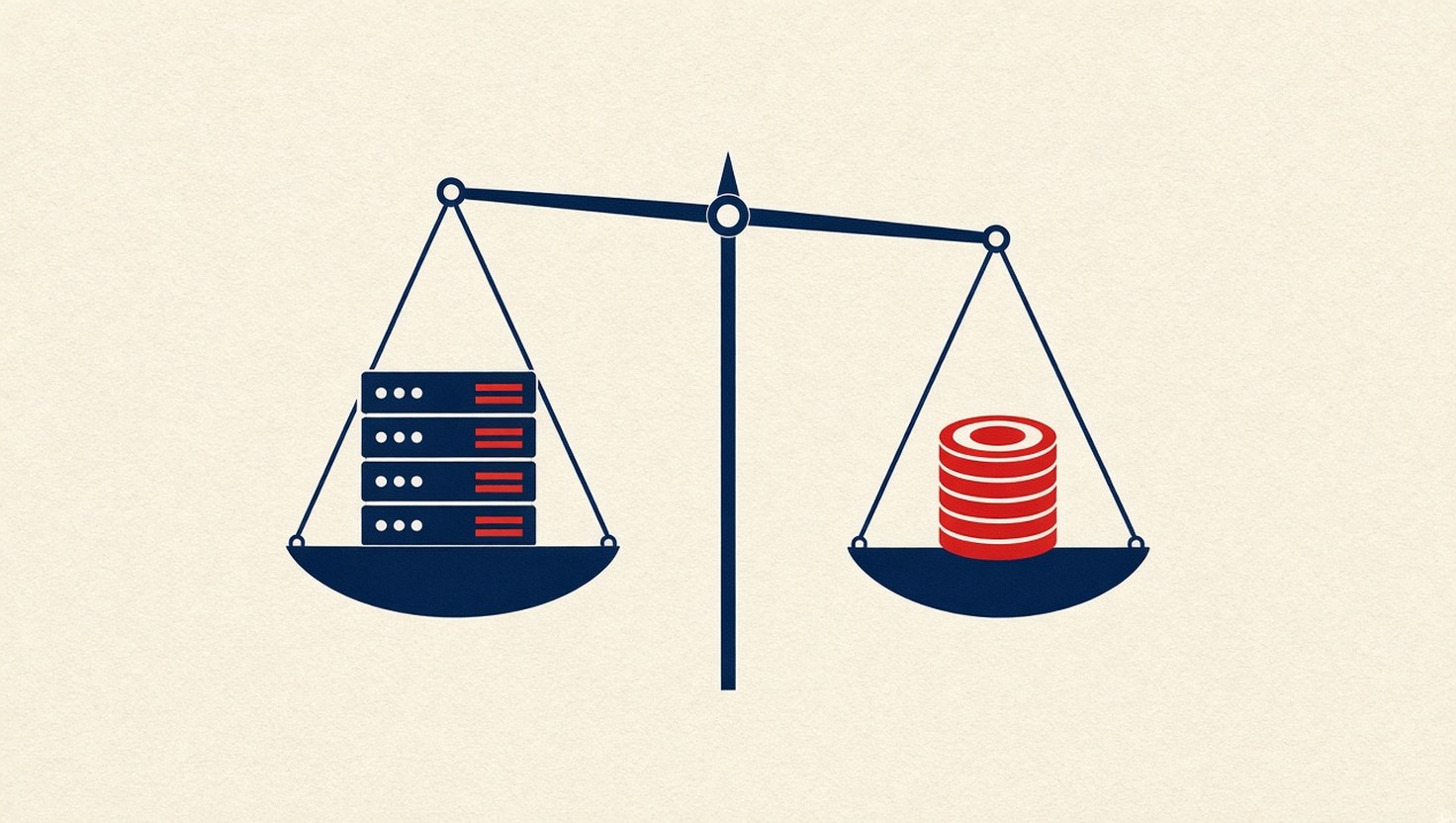
Alphabet spent $51.4 billion on buildings, servers and chips in three months. Its operations brought in $42.3 billion. That left it $9.1 billion short, the second quarter in a row its AI build-out has cost more than the business brings in. Microsoft spent on a similar scale and still kept $18.6 billion. This is DailyAI’s analysis of why the gap opened, and why we think the market is reading it a little too simply.
The numbers
Both companies reported on Wednesday for the three months to 30 September. Alphabet’s earnings release shows capital spending (capex, money for data centres and the chips inside them) of $51.4 billion, up from $24.0 billion a year earlier. Cash from operations fell to $42.3 billion from $48.4 billion. Free cash flow, the cash left after that spending, was minus $9.1 billion.
Microsoft’s cash flow statement shows $58.0 billion from operations, up 29%, and $39.4 billion paid for property and equipment. That leaves $18.6 billion of free cash flow. Its headline capex figure was $45.2 billion, because it also counts $7.4 billion of data centre leases, finance chief Amy Hood said on the earnings call.
Investors picked a side fast. Alphabet shares were down about 10% in premarket trading on Thursday, while Microsoft rose nearly 4%, CNBC reported. A close down more than 9.77% would be Alphabet’s worst reaction to earnings since it listed in 2004.
Not a story of AI failing to pay
It would be easy to read this as Google’s AI bet not working. The same release says otherwise. Google Cloud revenue rose 103% to $30.7 billion, and Alphabet’s total revenue rose 25% to $127.6 billion. Search revenue grew 12%. Sundar Pichai said Alphabet is now on “a half-trillion dollar revenue run rate”.
Microsoft’s growth was strong too, but not stronger. Azure, which Microsoft now reports in dollars, made $33.2 billion, up 48%. Google Cloud grew more than twice as fast. Alphabet’s shortfall is not a demand problem. It is a timing problem, and partly an accounting one.
Why the cash looks so different
In our view, three things explain most of the gap, and only one of them is about how good each company’s AI is.
First, how they pay. Microsoft leases part of its capacity and rents more from outside providers, so some of the cost lands in later quarters. Hood said some of that third-party capacity arrived late this quarter, which kept spending below the more than $50 billion Microsoft had planned. Alphabet’s capex figure is simply cash paid for property and equipment, and it designs its own TPU chips, so more of its bill shows up as it is paid. DailyAI recently reported that Google is now selling those chips to Oracle and OpenAI, which turns some of that spending into revenue.
Second, who is already paying. Microsoft has $677 billion of signed commercial contracts not yet counted as revenue, up 73%. Hood said operating cash rose on strong cloud billings and collections. Alphabet’s operating cash fell even as revenue grew.
Third, the plan. Microsoft expects capex of over $50 billion next quarter and about $170 billion this calendar year. Alphabet kept its 2026 forecast at $195 billion to $205 billion and told analysts spending will “increase significantly” in 2027, Reuters reported. Investors can live with a bad quarter. What they are pricing is a bigger bill next year with no number attached.
Our view
We think the market is right to watch cash, and wrong to treat one quarter as a verdict. Alphabet’s free cash flow over the last 12 months is still positive, at $19.7 billion, according to its own reconciliation. It is spending ahead of revenue it has not yet booked. Microsoft is spending closer to revenue it has already signed.
Both are bets. Microsoft’s is safer this year because its customers have committed. Alphabet’s could pay more if Cloud keeps doubling, but it has to keep doubling. Meta, which plans to sell up to $95 billion in new shares to fund its build-out, shows what happens when a company stops paying for AI from cash alone.
What to watch
Two numbers will tell us who is right. The first is Alphabet’s 2027 capex figure, which it has not given yet. The second is whether Google Cloud revenue keeps pace with it. If spending rises faster than Cloud, this quarter’s minus $9.1 billion becomes a pattern rather than a dip.
For anyone who owns these shares, the useful habit is simple: check operating cash flow and capex together in each quarterly cash flow statement, not just revenue. Investing terminals such as Kyro, which link brokerage accounts to AI models, can pull these figures up, but the filings themselves are free to read.