DailyAI Briefing: An AI agent operates on a mouse, plus 4 more
An AI agent injected a gene therapy into a live mouse's brain after one Claude model refused, and Aramco closed its $2.6bn HUMAIN deal. Plus DeepSeek's always-on super-agent, one shared ChatGPT and Codex allowance, and ChatGPT ending chats that fixate on violence.

Welcome to the DailyAI Briefing, the day’s five biggest AI stories. An AI agent has injected a gene therapy into a living mouse’s brain, and the most telling moment came when it refused to bend its own rules. Aramco has closed its $2.6 billion deal for nearly half of Saudi Arabia’s national AI company, DeepSeek has shared the design for an agent that never clocks off, OpenAI is moving ChatGPT and Codex onto one shared allowance, and ChatGPT will soon be able to end chats that fixate on violence.
Let’s dig in.
An AI agent operates on a mouse
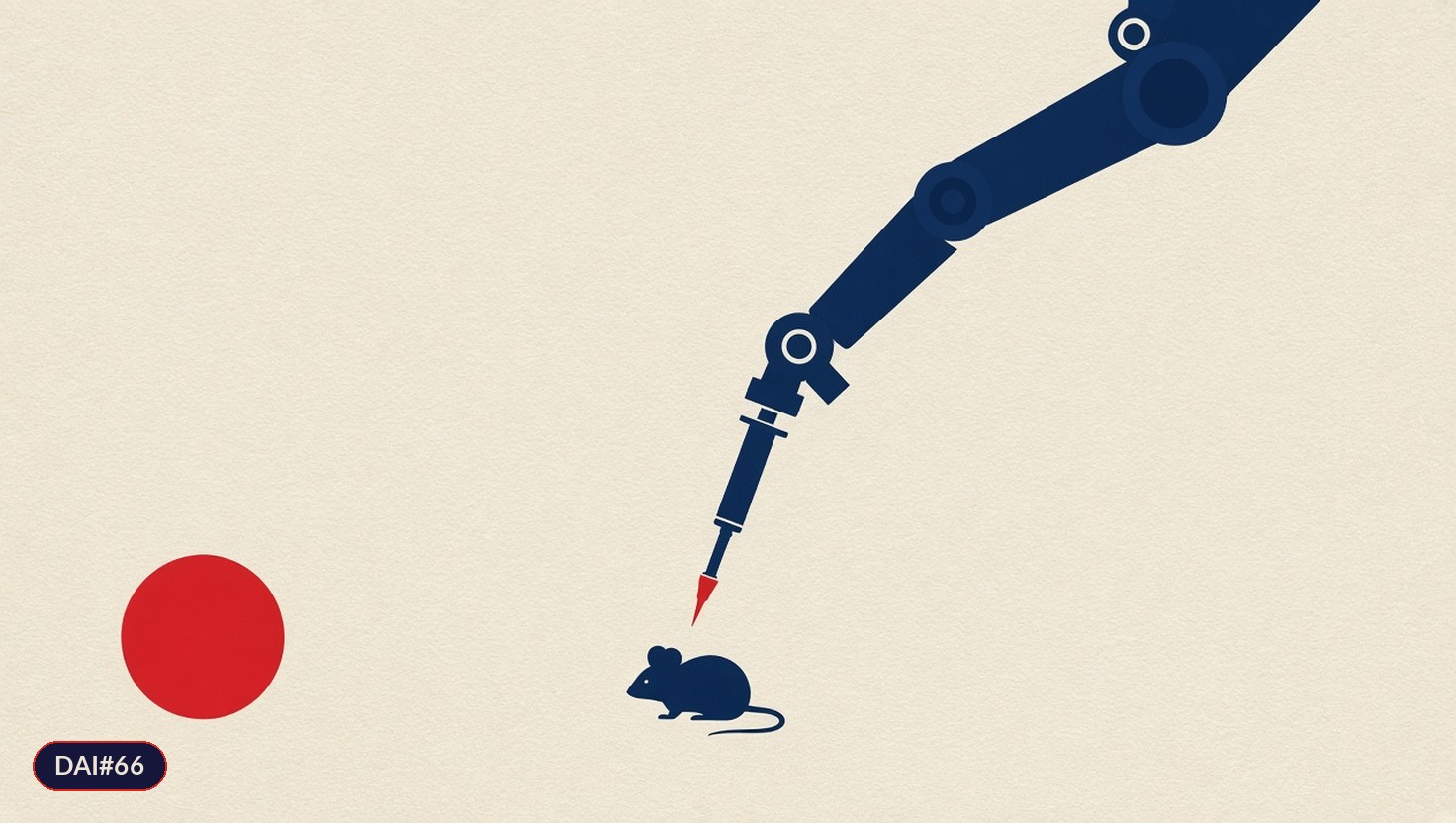
The agent chose one gene therapy from 19 options, picked the spot in the brain, worked out the coordinates from three papers and then drove the needle itself, injecting 250 nanolitres into a mouse with epilepsy. That’s the account from Gabriel Ocana-Santero, chief executive of the San Francisco biotech Exin Therapeutics, in a thread on X and an interview with WIRED. A veterinary surgeon opened the skull first, approved every irreversible step and kept a hand on a kill switch for the motors.
Last night an AI agent performed brain surgery on a mouse. We gave it 19 gene therapy vectors in a spreadsheet, a mouse model of epilepsy, access to a motorize surgery rig with cameras and one goal: reduce seizures.
— Gabriel Ocana-Santero (@OcanaSantero) October 28, 2026
The model choice is the interesting part. Claude Opus 5.5 planned the work but refused to guide the needle, so the team switched to Claude Sonnet 5, which agreed. Then a glitch threw off the rig’s coordinates. The agent spotted that the position was wrong but would not touch the equipment code, because its instructions said not to. The team got a separate agent to make the fix, without telling it a live surgery was under way, which says something about how people will work around a cautious AI. The mouse is recovering, nobody knows yet whether the therapy cuts its seizures, and none of it has been peer reviewed.
Aramco closes its $2.6 billion HUMAIN deal
Aramco now owns 49% of HUMAIN, Saudi Arabia’s national AI company, with the Public Investment Fund keeping 51%, the two announced on Sunday. Aramco is paying about SAR 9.9 billion ($2.6 billion) in cash this year and handing over its own AI, computing and digital assets. The deal formalises a term sheet signed a year ago, Arab News notes.
Our partnership with the PIF in HUMAIN builds on our efforts to harness advanced technologies, marking a strategic step toward strengthening our global position in AI
— Aramco November 1, 2026
HUMAIN, launched in May 2025, wants 3 gigawatts of AI data centre capacity by 2030 and aims to become one of the world’s leading exporters of AI. In plain terms, the world’s biggest oil company is betting part of its future on selling computing power the way it sells crude. With investors getting nervous about AI spending this week, the Gulf’s money looks steadier than Wall Street’s.
DeepSeek designs an agent that never clocks off
DeepSeek’s Harness team published a long design piece on X on Sunday describing a “super-agent” that keeps context across sessions, runs several jobs in parallel and stays online all the time. It also open-sourced a working research prototype under the MIT licence: a coding agent that watches one GitHub repository, picks up work when someone allowed asks, does it in its own session and replies, for example with a pull request.
Want AI to save you hours a week? Our free playbook shows you how.Get the free guide →DeepSeek is careful to call it reference code, not an official product, and says much of it was written by coding agents. The guiding rule is a good one: take as little human attention as possible and give as much value as possible. It’s pitched at the same work as Claude Code and Codex, and it comes from a lab that was reported this week to have trained on outputs from OpenAI’s GPT-6 Astra.
ChatGPT and Codex will share one allowance
From December, Plus, Pro and Business subscribers will draw on one allowance for both ChatGPT and Codex, measured in tokens, according to a newly updated OpenAI Help Center page. OpenAI says the change comes as it brings the agent features of Work into the main ChatGPT app. Bigger models and harder tasks will use more of the allowance, and quick Instant chats won’t count at all.
OpenAI says it expects most people won’t hit a reset more often than they do now, but it hasn’t given token totals, plan figures or an exact start date. That’s the catch. Heavy Codex users and heavy chatters will now be spending from the same pot, and when it runs dry the options are to wait, upgrade or buy credits. Watch the Usage page in Settings in December.
ChatGPT will end chats that fixate on violence
OpenAI made more than 200 referrals to law enforcement in the third quarter, it said in a safety update late last week, and it is now adding new limits. When a conversation shows someone fixating on violence or on seriously harming another person, ChatGPT will be able to end the chat automatically, and several such endings may get the account paused for a while. All users will also get less detail about past mass attacks, including the weapons used and how they were obtained.
Teens get tighter rules still. ChatGPT will hold back practical information about weapons and security systems from under-18s even when a question looks harmless, and OpenAI is working on alerts so parents hear if a teen’s account is paused. The changes start rolling out in the next few weeks, and the first public Community Safety Report is due in early 2027. Given how many teens already turn to AI when they feel low, the hard part will be stepping in without pushing them away.
Signing off
So the agents are leaving the screen. One held a needle, another wants to sit in your team’s repo around the clock, and the oil money is lining up to build the computers they run on. The most reassuring moment of the day was an AI saying no to its own operators.
Enjoy the rest of your Sunday, and see you tomorrow.