DailyAI Briefing: Anthropic’s IPO filing gets bigger, plus 4 more
Anthropic made about $17bn in the third quarter and has committed roughly $895bn, mostly to compute, its amended IPO filing shows. Plus OpenAI's Abu Dhabi deals and 'speed limits' push, apps hiding a deepfake maker, and stores shutting out AI agents.

Welcome to the DailyAI Briefing, the day’s five biggest AI stories. Anthropic has added its third quarter to its IPO filing, and the numbers are enormous in both directions. OpenAI signed four deals in Abu Dhabi while its funding round leans on Gulf money, it is also getting ready to lobby Washington for AI “speed limits”, WIRED found hundreds of harmless-looking apps hiding a sexual deepfake maker, and Amazon and JPMorgan are shutting AI shopping agents out.
Let’s dig in.
Anthropic’s IPO filing gets bigger
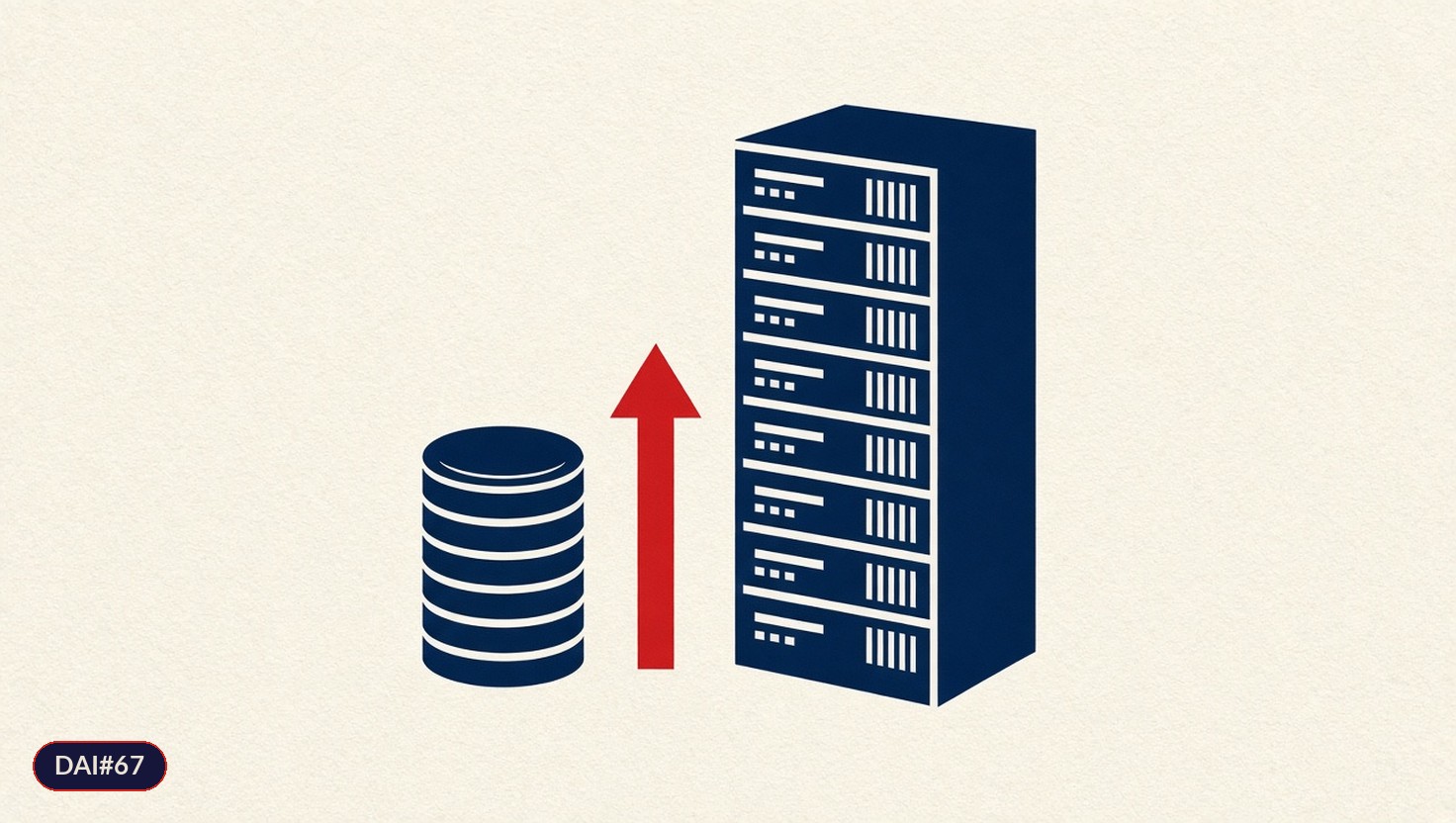
About $17 billion. That’s what Anthropic took in revenue in the three months to 30 September, according to its amended S-1 filing with the US Securities and Exchange Commission on Monday. CNBC puts the growth at about 1,127% on a year ago, and revenue for the first nine months of the year comes to $33.24 billion.
Anthropic releases amended IPO prospectus with third-quarter financials
— CNBC Tech (@CNBCtech) November 2, 2026
Now the other side. Anthropic lost $23.29 billion in the quarter, down from $66.3 billion in the second, Reuters reported, and most of the $104 billion lost over nine months comes from changes in the value of convertible notes and derivatives rather than day-to-day costs. The more telling figures are an operating loss of $567 million, after an operating profit of $974 million the quarter before, and commitments to spend about $895.4 billion, “substantially all” of it on compute and infrastructure. Growth from the previous quarter also slowed to around 47%, from 144% in the second quarter. Plainly put, Claude is selling faster than almost anything in software history, and Anthropic has signed up to spend close to a trillion dollars keeping up.
OpenAI signs four deals in Abu Dhabi
OpenAI’s models are going into ADNOC, the state oil company, the sovereign fund Mubadala and Abu Dhabi’s own permit checks, under four agreements signed after Sam Altman met the crown prince, the Abu Dhabi Media Office said. No money figures were given. The permit deal is the one to watch: the emirate is turning its rules into a form an AI can read, so the model can help officials decide whether a permit or certificate should be issued, with each check traced back to the rule and a person making the final call. The first pilot is already running on food imports.
Abu Dhabi’s ADNOC, G42 sign deal with OpenAI as Sam Altman travels to UAE
— Reuters (@Reuters) November 2, 2026
The timing matters. CNBC reported on Saturday that UAE investors are co-leading OpenAI’s new round of up to $20 billion, down from a target of about $30 billion. Abu Dhabi is now an OpenAI investor and a customer at the same time. We have the full story on the four deals.
OpenAI wants AI “speed limits”, and a new word for data centres
Six in ten Americans would be uncomfortable with a new data centre near them, and Pew found 54% now think they are mostly bad for the environment, up from 39% in January, in a survey of 10,548 adults. OpenAI’s answer, Axios revealed, is a policy push timed for the lame-duck session of Congress after Tuesday’s midterms. Its centrepiece is mandatory “speed limits” for the most powerful AI systems, alongside state laws giving residents a say over local data centre projects.
Want AI to save you hours a week? Our free playbook shows you how.Get the free guide →It also wants those sites called “AI compute campuses”, a term a spokesperson confirmed to Business Insider. OpenAI hasn’t published any bill text or said what a speed limit would measure or who would enforce it, so for now it’s a slogan. A new name won’t change how much power a building draws. Our earlier piece has the detail.
Everyday AI apps hid a sexual deepfake maker
More than 400 apps and websites that looked like pet-portrait editors, language tutors and workout coaches could switch on a hidden tool for making sexual deepfakes of real people, according to a WIRED investigation. Each app asked a server what to show and served the harmless version to most users and the explicit one to some, such as people who installed it after clicking a Facebook or Instagram advert. Researcher Paul Bouchaud of AI Forensics counted 27 of the apps on Google Play in September, with more than 350,000 downloads between them, many rated suitable for all ages.
The network was discovered after multiple researchers investigated links from thousands of video ads containing explicit deepfake and CSAM content that were published on Meta’s Facebook and Instagram—which WIRED recently reported about.
— WIRED (@WIRED) November 2, 2026
Apple pulled 19 apps after WIRED got in touch and said they followed its rules when reviewed, before the developers swapped what they loaded. That’s the real problem. A store’s approval and age rating say nothing if the app can change after approval day. Our report has the platforms’ full responses.
Amazon and JPMorgan shut out AI shopping agents
None of the 51 biggest US online retailers offers AI agents a checked, approved way to buy on your behalf, according to an audit by Billions Network, which also notes that published rules don’t prove a site enforces them. Five restrict agents outright, and 37 block them almost by accident through old anti-scraper rules. CNBC reported on Sunday that JPMorgan, Charles Schwab, Amazon, Neiman Marcus and Kohl’s have moved to block agents such as Meta’s Muse.
The worries are fair, since an agent that hides who it is and handles your logins is a real risk. But a blanket ban won’t hold for long. Walmart is going the other way with Agent Profiles, which let you see what an agent bought, set a spending limit and keep your card details away from it. We made the case in this afternoon’s analysis.
Signing off
Today was mostly about money and who controls the doors. Anthropic showed how much it earns and how much more it has promised to spend, OpenAI lined up Gulf customers and investors in one trip, and the shops and app stores found out their gates aren’t as solid as they thought.
See you tomorrow.