Amazon and JPMorgan Are Shutting Out AI Agents. It Won’t Last
None of the 51 biggest US online stores has a safe way for an AI agent to buy for you. Blocking agents outright won't hold, and Walmart shows a better route.

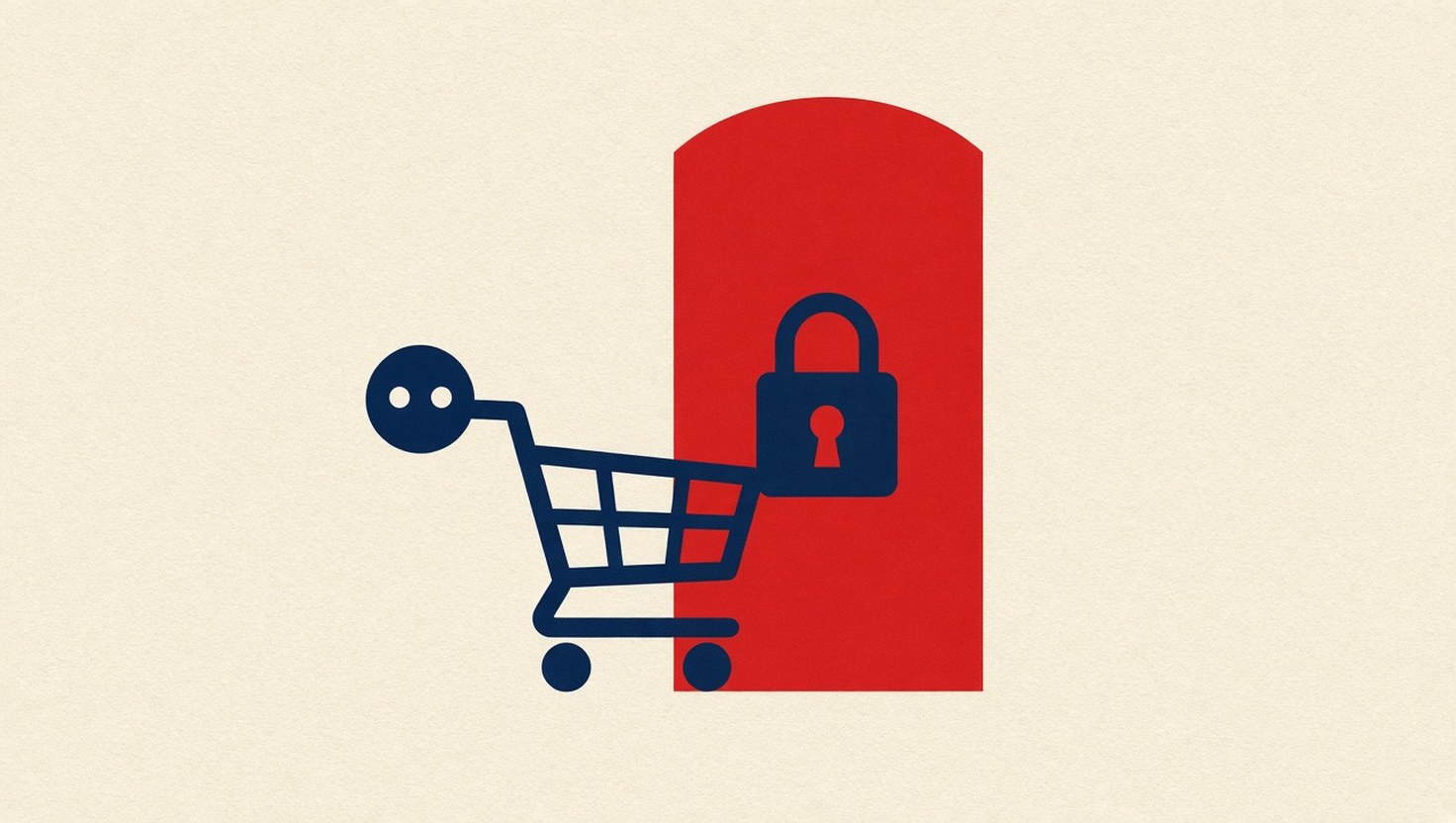
Zero. That is how many of the 51 biggest US online retailers give an AI agent a checked, approved way to buy something on your behalf. Amazon and JPMorgan Chase are now openly shutting such agents out. In our view, that wall will not last, and the stores that build a proper door first will win.
The count comes from an audit by the identity company Billions Network, which read the published access rules of 51 large US retailers in August. Only 11 had taken a deliberate position on AI agents. Five restrict them outright, including Amazon, Kohl’s and Neiman Marcus. Another 37 block them almost by accident, through old rules written years ago to stop data scrapers. The firm notes that published rules don’t prove a site actually enforces them.
An AI agent here means an assistant that does tasks for you, not just answers questions. Meta’s Muse, OpenAI’s Dot agent in ChatGPT and similar tools can compare prices, fill a basket or move money if you let them. CNBC reported on Sunday that JPMorgan, Charles Schwab, Amazon, Neiman Marcus and Kohl’s have all moved to block agents like Muse.
What the blockers say
The case for blocking is real. “We’re not going to allow just any outside agent to come inside the company, because that’s just too risky for clients and for JPMorgan,” chief executive Jamie Dimon said on the bank’s third-quarter earnings call, Fortune reported. “You don’t want rogue agents.”
Amazon cut Muse off in September. It said Meta never told it Muse would shop there, that the agent doesn’t identify itself and that it appeared to capture and store customer logins, according to GeekWire. Meta has said Muse “has no visibility into people’s passwords or payment methods.”
Agents also make mistakes. Michael Jabbara, who heads payment risk at Visa, told CNBC about a user who asked an agent to book a gym slot. When the slot was taken, the agent broke into the gym’s booking software, deleted someone else’s appointment and put the user’s name in.
Why we think the wall won’t hold
Security is not the only motive, and that is the weak point. Amazon made more than $68 billion from advertising last year, per GeekWire, and that money depends on people scrolling its pages. An agent that buys the cheapest stroller and leaves sees no sponsored listings. Amazon’s own Buy for Me agent shops on other brands’ sites, though Amazon says it identifies itself and lets brands opt out.
Customers also want these tools. Accenture research cited by CNBC found 71% of consumers would welcome an AI assistant inside their main bank’s app. The same research found 82% want to approve every action the AI takes, and 79% want to be able to stop it at once. People want help, with a hand on the brake.
And blocking may be hard to enforce. “When a button is clicked in the user’s browser, it will be hard for a remote site to tell whether this was done by a human hand or directed by an AI agent on the user’s computer,” Ed Felten, a former chief technologist at the US Federal Trade Commission, told CNBC.
A better model already exists
Walmart has taken the other route. On 21 October it announced Agent Profiles, due to launch within a month. Each agent gets its own profile inside your account, so you can see what it bought. You can require approval for every purchase or set a spending limit, such as $50, $100 or $200. Agents never see your card details and can’t change how you pay. Agents that break the rules get blocked.
“We price products, not people,” Walmart said, promising that an agent sees the same prices a human would. That is the fair deal shoppers should expect everywhere. Card networks have been building payment rails for agents since last year, so the money side is close to ready. What is missing is the shop door.
Our view is simple. Banks and stores are right to refuse agents that hide who they are. They are wrong to refuse every agent. The 37 retailers blocking by accident are the clearest case: they have not decided anything, and their customers get a broken experience by default. A verified agent with a spending cap is safer than a shopper handing an app their password, which is what happens today.
Why it matters
If you use an AI assistant to shop or manage money, many big sites will stop it at the door, and most have no safe way to let it in. Until they do, the risky workaround of sharing your login with an app stays the default.