Satya Nadella: career, education and views on AI
AI People / Big tech, chips and compute
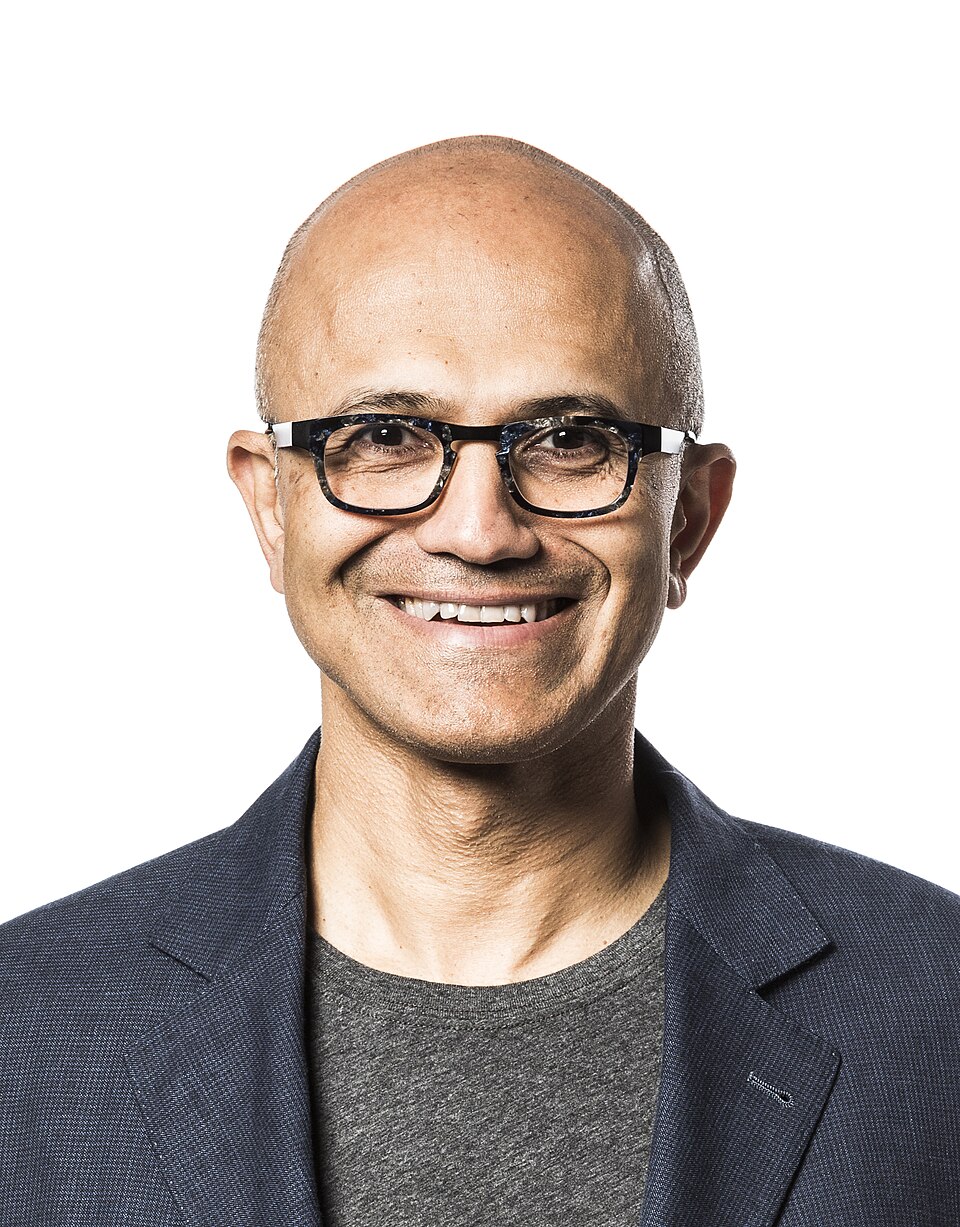
Satya Nadella
Nadella has run Microsoft since 2014, moving it to the cloud and then into AI through its early bet on OpenAI. He is one of the industry’s most measured voices, judging AI by whether it lifts economic growth rather than by claims of AGI.
By David MerryUpdated 27 Nov 2026
- Role
- Chairman and chief executive, Microsoft. CEO since 2014, chairman since 2021
- Born
- 19 August 1967, Hyderabad, India
- Education
- MBA, Chicago Booth. MS in computer science, University of Wisconsin-Milwaukee. Electrical engineering degree, Manipal Institute of Technology
- Before CEO
- Ran Microsoft’s cloud and enterprise business
- Joined Microsoft
- 1992, from Sun Microsystems
- Started out as
- An engineer who moved from India to the US to study computer science
- Follow and read
- X @satyanadellaLinkedInBlogWikipedia
Career.
Three decades at Microsoft, from engineer to the chief executive who bet the company on AI.
- Engineering degreeGraduates in electrical engineering from the Manipal Institute of Technology, then moves to the US for a master’s in computer science.Source: Wikipedia
- Joins MicrosoftArrives from Sun Microsystems. He later earns an MBA from Chicago Booth, in 1997.Source: Wikipedia
- Server and ToolsTakes over the $19 billion Server and Tools business and leads Microsoft’s shift to cloud with Azure.Source: Wikipedia
- Chief executiveNamed Microsoft’s third CEO, after Bill Gates and Steve Ballmer. He buys LinkedIn in 2016 and GitHub in 2018.Source: Wikipedia
- Backs OpenAIMicrosoft begins its partnership with OpenAI, starting with an investment in the research lab.Source: Microsoft
- ChairmanSucceeds John W. Thompson as chairman of the board.Source: Wikipedia
- New OpenAI dealAgrees new terms as OpenAI restructures. Microsoft’s stake is valued at about $135 billion, roughly 27%, and it can now pursue AGI on its own.Source: Microsoft
- Starts bloggingUses a new personal blog to urge people to move past arguments about AI “slop”.Source: The Register
Where he stands.
Wants proof in the economy, not in benchmarks.
AGI
Dismisses companies declaring their own AGI milestones as “nonsensical benchmark hacking”.Source: Windows CentralThe real test
Says AI will have arrived when the developed world is growing at 10% a year, and that the case for heavy AI spending must come from productivity gains across the economy.Source: GeekWireDiffusion
Argues 2026 is about putting AI to use widely, and that what matters is how people apply models, not how powerful any one model is.Source: The Register
In his words.
Quoted exactly, with where and when he said it.
Us self-claiming some AGI milestone, that’s just nonsensical benchmark hacking to me.
Dwarkesh Patel podcast, February 2025
“My formula for when can we say AGI has arrived? When, say, the developed world is growing at 10%.”
Madrona annual meeting, Seattle, March 2025“We have moved past the initial phase of discovery and are entering a phase of widespread diffusion.”
sn scratchpad blog, January 2026“What matters is not the power of any given model, but how people choose to apply it to achieve their goals.”
sn scratchpad blog, January 2026“The choices we make about where we apply our scarce energy, compute, and talent resources will matter.”
sn scratchpad blog, January 2026
Read him.
The essays and appearances that best explain how he thinks, from the source.
Connections.
The people who matter most to his story.
- Sam AltmanOpenAI chief executive and Microsoft’s most important AI partner.
- Mustafa SuleymanDeepMind co-founder he hired in 2024 to lead Microsoft AI.
- Bill GatesMicrosoft co-founder and its first chief executive.
- Steve BallmerHis predecessor as chief executive.
Latest on DailyAI.
Our most recent reporting on Satya Nadella, updated automatically.
Industry
Amazon: developers to be replaced by AI in 24 months and Chinese AI woes
Industry
Microsoft delays Recall as it prioritizes security over AI
Industry
AI agents, multimodal Phi-3 unveiled at Microsoft Build 2024
Opinions & Analysis
OpenAI’s superalignment meltdown: can any trust be salvaged?

Industry
DHS launches AI safety board but big open-source names absent

Ethics & Society
The paradox of curiosity in the age of AI
Sources (7)
Spotted an error? Tell us