Jensen Huang: career, education and views on AI
AI People / Big tech, chips and compute
Jensen Huang
Huang co-founded Nvidia in 1993 and turned a graphics chip maker into the company whose processors power the AI boom. In November 2026 he resigned amid reporting about his personal life, and the board reinstated him 11 days later.
By David MerryUpdated 27 Nov 2026
- Role
- Co-founder, president and chief executive, Nvidia, since 1993
- Born
- 17 February 1963, Taipei, Taiwan
- Education
- MS in electrical engineering, Stanford. BS, Oregon State University
- Before Nvidia
- Chip designer at AMD and LSI Logic
- Honours
- Queen Elizabeth Prize for Engineering 2025. IEEE Medal of Honor 2026
- Started out as
- A dishwasher and waiter at Denny’s, aged 15
- Follow and read
- Nvidia bioNvidiaWikipedia
Career.
From an immigrant schoolboy in Kentucky to running one of the most valuable companies in the world.
- Moves to the USSent from Taiwan at nine with his older brother, he ends up at a boarding school in Oneida, Kentucky, before the family settles in Oregon.Source: Wikipedia
- Oregon StateGraduates in electrical engineering and starts designing microprocessors at AMD.Source: Wikipedia
- LSI LogicMoves to LSI Logic, where he meets Chris Malachowsky and Curtis Priem.Source: Wikipedia
- StanfordEarns a master’s in electrical engineering, studying part time while working.Source: Wikipedia
- Founds NvidiaLaunches the company with Malachowsky and Priem, famously planned at a Denny’s in San Jose. He steers it through near-bankruptcy in the 1990s.Source: Wikipedia
- $5 trillionNvidia becomes the first company worth more than $5 trillion as demand for its AI chips soars.Source: Wikipedia
- ResignsSteps down as chief executive on 12 November, effective immediately. Finance chief Colette Kress becomes interim CEO.Source: The Next Web
- ReinstatedOn 23 November the board unanimously reinstates him, saying input from senior US government levels showed his return poses no national security risk.Source: Nvidia filing
Where he stands.
Sees AI as a new industrial revolution, and Nvidia as the company supplying it.
Work
Says every job will be affected by AI, and that the bigger risk is falling behind people who use it.Source: CNBC via NBCEconomy
Argues AI is probably the best way to raise GDP.Source: CNBC via NBCSoftware
Believes code written by people for CPUs is giving way to machine-learned software running on GPUs.Source: CNBC via NBC
In his words.
Quoted exactly, with where and when he said it.
You’re not going to lose your job to an AI, but you’re going to lose your job to someone who uses AI.
Milken Institute Global Conference, May 2025
“Every job will be affected, and immediately. It is unquestionable.”
Milken Institute Global Conference, May 2025“You could argue that artificial intelligence is probably our best way to increase the GDP.”
Milken Institute Global Conference, May 2025“What used to be human-coded softwares running on CPUs are now machine learning generated softwares running on GPUs.”
Hill and Valley Forum, April 2025“I take this responsibility with the greatest humility and renewed commitment.”
On his reinstatement, Nvidia, November 2026
Read him.
The essays and appearances that best explain how he thinks, from the source.
Connections.
The people who matter most to his story.
- Chris MalachowskyNvidia co-founder.
- Curtis PriemNvidia co-founder.
- Colette KressNvidia finance chief. Interim CEO during his 11 days away.
- Sam AltmanRuns OpenAI, one of Nvidia’s biggest customers.
Latest on DailyAI.
Our most recent reporting on Jensen Huang, updated automatically.
Policy & Regulation
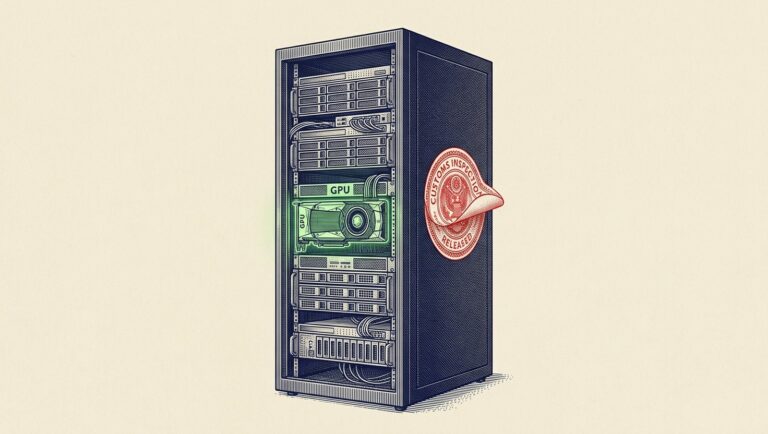
Nvidia’s most advanced chips turn up in a Shanghai loan document
Industry
Nvidia agrees to pay $290 million over 2018 crypto-mining lawsuit
Industry
DailyAI Briefing: Nvidia chip ban leaks, Pentagon denial, plus 4 more

Opinions & Analysis
The week the AI chip ban failed in public
Policy & Regulation
US chip curbs and copying defences are slowing China’s top AI labs

Industry
S&P puts Nvidia’s credit rating on watch over governance and key-man risk
Sources (5)
Spotted an error? Tell us