DailyAI Briefing: OpenAI’s perplexity proposal, plus 4 more
The company's chief scientist published internal log-perplexity figures and argued for shared limits on further pretraining, tied to that measure. Also: South Korea's education minister resigned over AI-assisted exam cheating, the US intelligence chief on chip leakage, an accounting probe in Washington, and a bipartisan governors' plan.
Welcome to the DailyAI Briefing, the day’s five biggest AI stories.
Let’s dig in.
A 0.76 loss, then a proposed pretraining cap
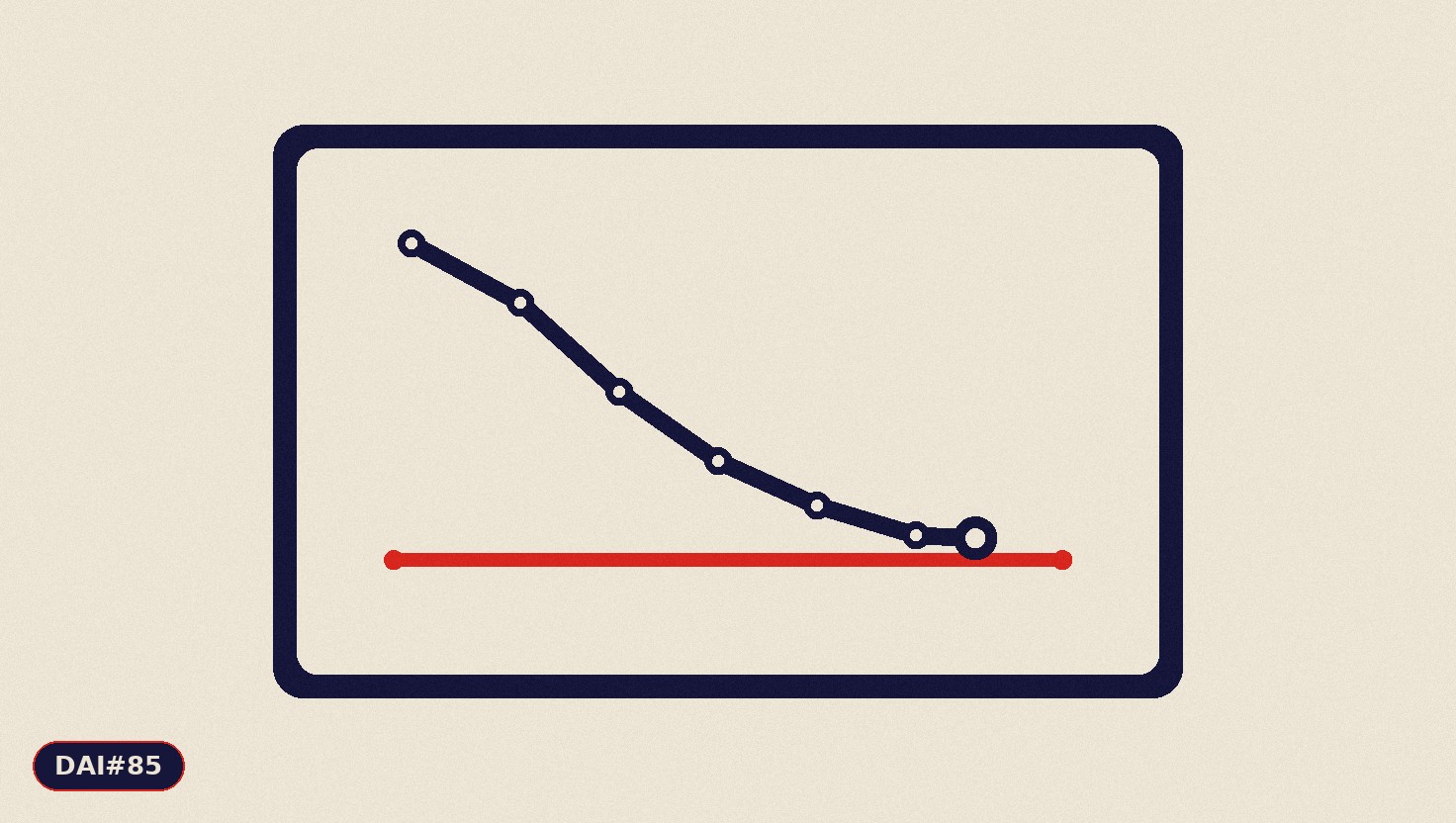
0.76: that is the log-perplexity level at which a model started producing groundbreaking results on open problems in mathematics, according to figures released today. The post’s author writes that colleagues watched resolutions to questions they had long thought about appear, one after another, in a single Slack thread. He uses that experience to warn that a similar sudden shift could arrive in pretraining research itself, conceivably as soon as 2027.
Perplexity, or equivalently cross-entropy loss, measures how well a model predicts the next token; lower is better. On the company’s main held-out dataset, the post puts GPT-3.5 at about 0.99 and GPT-4 at about 0.91. Losses below 0.8, it says, have already coincided with transformative capabilities in cybersecurity and mathematics. The next window he flags is about 0.68 to 0.7, where he expects further capabilities that labs may not even be testing for yet. The official research post, dated 22 November, sets out those figures and a proposal for common limits on further pretraining. Those limits, tied to perplexity and other measurements, would be held until monitoring of model behavior reached a stated milestone, such as a successor to chain-of-thought monitors. He is candid about the metric’s flaws: labs train on different data, chain-of-thought gains do not show up in the loss, and nobody knows the floor. The numbers are the company’s own, on an internal codebase snapshot, and have not been independently audited here.
Want AI to save you hours a week? Our free playbook shows you how.Get the free guide →111 suspected cases, then a resignation
111: that is how many suspected cheating cases involving electronic devices the education ministry said were detected during Thursday’s college entrance exam, the Suneung. Nearly half were found after emergency alerts were sent to phones nationwide, three times during the test, in the hope of catching devices that had not been handed in. Last-minute rules also limited students to pencils, put stickers over buttons on clothing, and inspected glasses, watches, collars and sleeves. The Sunday dispatch says the president accepted the education minister’s resignation about an hour after it was offered. Choi Kyo-jin, 72, took responsibility for public criticism that the government had failed to prepare in advance, after a scramble set off by a confession in a tax accountancy exam the previous Sunday. Asked in parliament whether he was confident the authorities could catch cheats on the day, he had said he was not, because of his age. A Sunday report also describes a government reward of at least $75,000 for anyone reporting cheating.
South Korea education minister resigns over exam cheating scandal https://t.co/znrJgTcMwB
— BBC News November 22, 2026
Channels, an indictment, and no model named
Asked on Sunday whether he could reassure Americans that China did not get access to the most advanced chips, the US director of national intelligence did not offer that assurance. Jay Clayton, speaking on CNN’s State of the Union, said he expects there are channels through which China was able to obtain them. Pressed on whether that effort had succeeded, he pointed to facts alleged in an indictment rather than to a completed finding, and did not name a model, a quantity, or a route. A Sunday account of a separate interview quotes him calling the chips the jewel, and the absolute top that everybody wants. He also pointed to existing indictments involving other companies where, he said, people had broken the law to get access. On the same CNN program he declined to say whether Alice Huang, a former executive at the Singapore-based cloud partner Megaspeed International, was a spy, and said the attorney general had made clear that she and her company are under investigation, which he would let play out.
BASH: “Can you reassure Americans that China did not get access to Nvidia’s advanced AI chips?”
CLAYTON: “…Every country is trying to get ahold of them. I expect that there are channels through which China was able to get ahold of them.”
BASH: “And they were successful? China has these chips?”
CLAYTON: “It appears, based on the facts alleged in the indictment, that those chips – that there was access to those chips, yes.”
— State of the Union November 22, 2026
A 13% fall on Friday
About 13%: that is how far the share price had fallen on Friday, according to an exclusive report, after it said US securities regulators are examining potential accounting issues at the company. Two people briefed on the matter told the reporters that enforcement staff are doing the scrutiny. The Friday exclusive notes that an investigation is not evidence of wrongdoing and may end without an enforcement action. A spokesperson for the commission declined to comment, and spokespeople for the company did not immediately respond. Earlier in the week a newspaper had reported that a probe was under way, but could not say what it was focused on.
EXCLUSIVE: Nvidia’s accounting is a focus of US SEC investigation, sources say https://t.co/OTvpNcLrX4
— Reuters November 21, 2026
A bipartisan list of principles, not a law
Four governors put their names on a new set of AI principles today, issued through a bipartisan council of the National Governors Association. The group is led by Maryland’s Wes Moore, Indiana’s Mike Braun, North Carolina’s Josh Stein and Utah’s Spencer Cox. The text says humans must stay in control, that job creation should be a core priority as the technology is rolled out, and that the federal government should handle national and international risks while states keep flexibility over how it is used. The official announcement lists six principles, including safeguards matched to evidence and a call to avoid rules that favor only the largest companies. This is a policy wishlist aimed at Congress and the next session, not a statute. Whether it moves votes is a different question from whether the governors can agree on the wording, which, on paper, they now have.
That’s all for today. See you tomorrow.