The proof nobody could read just got 228 times smaller
A machine-checked proof of the Riemann hypothesis ran to 17.4 million lines. Less than a week later, it was down to 76,000.

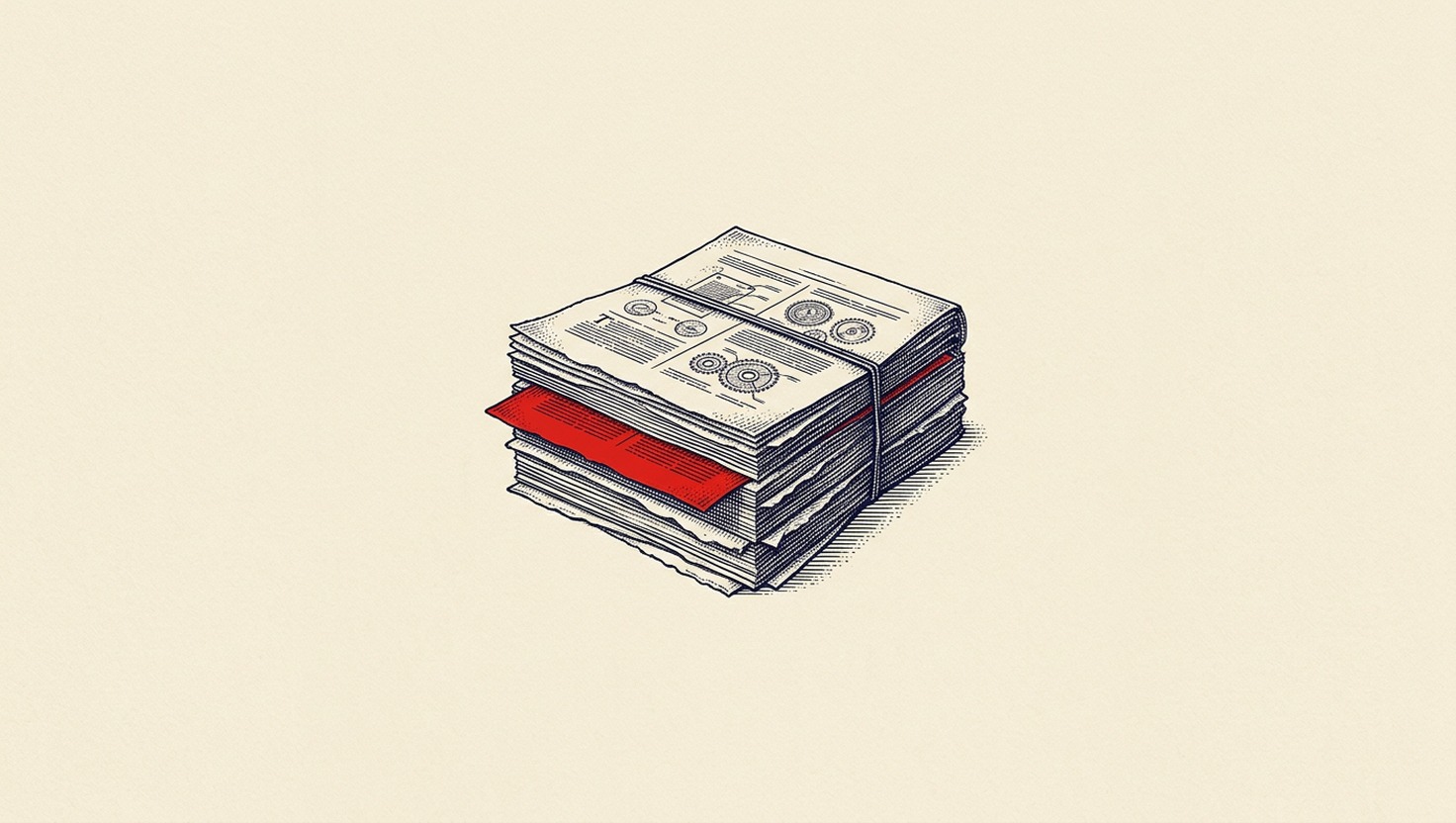
The most famous unsolved problem in mathematics now comes in two editions. The first is a proof of the Riemann hypothesis — the 1859 conjecture about how primes are scattered along the number line — written as 17,374,215 lines of computer code. The second, published less than a week later, proves the same theorems in roughly 76,000 lines. Neither has been read by a human. Both have been checked by a machine.
On Friday 20 November, Levent Alpöge, a mathematician at Anthropic, announced that Claude — the company’s AI assistant — had helped him prove the hypothesis over about six weeks. The proof is not prose but code, written in Lean, a programming language built so a computer, not a person, can verify each step. DeepMind’s agents have used Lean to find and prove faster quantum algorithms, so the tool is established. The timing was awkward, as Alpöge conceded: the announcement landed a day after Anthropic’s record flotation. “The precise timing is horrible. If I could have, I’d have finished this all much earlier,” he said.
By Saturday, the two organisations that maintain Lean and its mathematics library said they had checked the proof and had “full confidence that Alpöge’s proof of the Riemann hypothesis is correct”, the Guardian reported. Written out as traditional mathematics, the argument would run to roughly 250,000 pages, by outside estimates. No human has read it.
The shrink
Then came the part that matters more. Luke Sernau, an Anthropic researcher — formerly of Google DeepMind, and better known as the author of the leaked 2023 memo “We Have No Moat, And Neither Does OpenAI” — published a repository called grh-lean: a compressed proof of the Riemann hypothesis and its generalisation, “produced in collaboration with my colleagues at Anthropic, and Claude”. It keeps the same five theorems, uses only Lean’s three standard axioms, and cuts the length by 99.56 per cent.
The compression is not cosmetic. Building the original reportedly took about 21 hours on a high-end cloud machine; the short version compiles in one to two hours on an ordinary 12-core computer. A community effort to trim the original had drawn more than 200 contributors and 5,000 proposed changes without getting below 13 million lines; a separate automated project shrank the file to roughly 8 per cent of its size — and that version never compiled. Sernau’s method — flattening definitions, simplifying across module boundaries, dropping what the argument did not need — is a workflow, not a trick. The repository even ships a “readable edition” of about 300,000 lines with a guide for mathematicians.
Want AI to save you hours a week? Our free playbook shows you how.Get the free guide →And the repository’s status line is the honest sentence at the centre of this story: “The proof has passed machine checks only, listed in each folder’s README.” No mathematician has read it through, and no paper comes with it.
Verification without understanding
The reaction has split along a line that did not exist in mathematics a year ago: between being sure a proof is right and knowing why. Andrew Sutherland, an MIT mathematician who works with Lean, told NPR’s Geoff Brumfiel — which notes Anthropic is among its financial supporters — “Even though I have no understanding of the proof, and nobody does, I am more confident that this proof is correct than any proof I have ever encountered.”
Scott Aaronson, the University of Texas computer scientist who has spent the week reacting to the cascade of AI-generated results, drew the practical conclusion on his blog on 25 November. Anthropic and OpenAI had released claimed proofs of Valiant’s VP≠VNP conjecture — an algebraic warm-up to P≠NP — on the same day, and OpenAI then claimed the exact value of ω, the number that measures how fast large matrices can be multiplied — one of the claims in OpenAI‘s AI maths trove. Aaronson’s shock was not the answer but the lower bound: “I never expected this challenge to be all that much easier than P ≠ NP.”
And he set out his new default: “my working assumption by this point is that any proof that comes directly from OpenAI or Anthropic is correct barring information to the contrary.” A professional sceptic — the person whose job has been to doubt grand claims in this exact field — is saying the burden of proof has quietly flipped. Machine-checked results from the labs are now presumed correct until someone shows otherwise, even when nobody understands them.
There is a limit to the confidence, and it is worth stating plainly. Verified is not the same as valuable: a proof nobody can read yields a yes/no answer, not insight. Sutherland noted that existing results which assumed the hypothesis can now be upgraded, but a true mathematical revolution requires humans to understand the argument. And the same trust question is already live elsewhere — at least 25 court cases in England and Wales were hit by undisclosed AI use, where nobody verified the output at all.
Then there is the mythology. This week’s viral rumour that the AI labs are sitting on cryptography “bombshells” — which Aaronson acknowledged he had helped feed — shows how quickly machine-verified mathematics mutates into unverifiable legend when it leaves the repository. The Riemann hypothesis is still waiting to be understood. What changed this week is smaller and larger than the headline: the distance between a proof and a paper narrowed from 17 million lines to 76,000 — close enough, maybe, for the first human reader to start walking.